


Helpful Information for Coping with Depression in Children and Teens

Crisis Options
Go directly to the nearest EMERGENCY ROOM or call 911 if your child is having suicidal thoughts or has made a suicide attempt.
UTAH CRISIS LINE: Call 988
There may be times in your life or the life of your loved ones where there is a struggle to find ways to manage a difficult emotional situation or life stressor. The Utah Crisis Line, in association with the National Suicide Prevention Lifeline, is here to provide compassionate support during difficult times and refer anyone in need of mental health services. Callers of any age and with any mental health issue may reach out for help. Multi-lingual services are available.
SafeUT Crisis Chat and Tip Line APP (Download in the Apple App Store or the Google Play Store)
Utah service that provides real-time, emotional support and crisis prevention 24/7/365 to students, parents, and educators. You can chat with a licensed counselor for support or submit a confidential tip right from your smartphone, or call 833-372-3388 to talk about whatever is on your mind.
SMR Services: SMR stands for Stabilization and Mobile Response Services. This is offered through the state and is a crisis number. They will send someone to your house in a crisis situation and they will offer support to your child and you. Their number is 833-723-3326 or 988
National Suicide Hotline: 800-273-8255 or 988
Tips and Tricks for Managing Depression in Children and Teens
Take Care of Yourself: Meeting basic needs is a large part of managing depression. Allowing and enforcing basic hygiene, a healthy diet and getting the appropriate amount of sleep can make a large impression on our mental health.
Schedule Positive Activities: Many people assume that depression is caused by a negative event in life: for kids, maybe this is a move, a divorce, or an experience being bullied. While it’s true that tough life situations can trigger depression, researchers who studied depression found that a lack of positive experiences can also lead to low mood. You can help your child by encouraging activities that are social, fun, or provide a sense of accomplishment.
Talk Back to Negative Thoughts: Kids with depression are prone to ruminating: mulling over their negative thoughts over and over again, which makes their sad feelings more intense. Depression often exaggerates and distorts our thinking, making our thoughts too negative to be true. Kids can stop the cycle of ruminating by spotting these overly-negative thoughts, questioning them, and coming up with a more helpful and realistic alternative. This skill is best for kids who are elementary-aged or older. Sometimes it is hard for kids to learn this skill on their own, because it requires them to think about thinking, which is an abstract concept. You can help your child catch himself when he’s thinking something too negative to be true, and encourage him to ask himself questions like:
Do I have any proof this is true?
What would I tell a friend who had this thought?
Is there another way of looking at this?
OK, it if really is true, would it be the end of the world
Add More Sunshine and Outdoor Activities: There is a theory that sunlight might encourage the body to produce serotonin, a chemical that influences many processes in the body including our sleep, digestion, and mood. For kids, outdoor play is a great way to improve mood and cope with depression. Children who play outdoors get more sunlight, but this kind of play offers all kinds of other benefits, too. A study by the American Medical Association found that “children will be smarter, better able to get along with others, healthier and happier, when they have regular opportunities for free and unstructured play in the outdoors.”
Websites
-

CredibleMind Intermountain Healthcare
Explore topics for your mental wellbeing such as anxiety, depression, mindfulness, resilience, trauma, medication, parenting, etc. where you can find articles, assessments, books, podcasts, practice modules, etc. for each topic.
-

-

Nemours Kids Health
Article to help you determine if your child is experiencing symptoms of depression, what causes childhood depression, and what you should do if you think your child may be depressed.
-

Mental Health Literacy
Learn about depression, how you can identify symptoms of depression, what to do if you are concerned that someone you know might have depression, what treatment options exist, etc.
-

HelpGuide.org
It isn’t always easy to differentiate between normal teenage growing pains and depression. But here’s how you can recognize the signs and symptoms and best help your child.
-

Mental Health Apps
For mental health apps, see our link under “Mental Health Apps & Website”.
Books
-
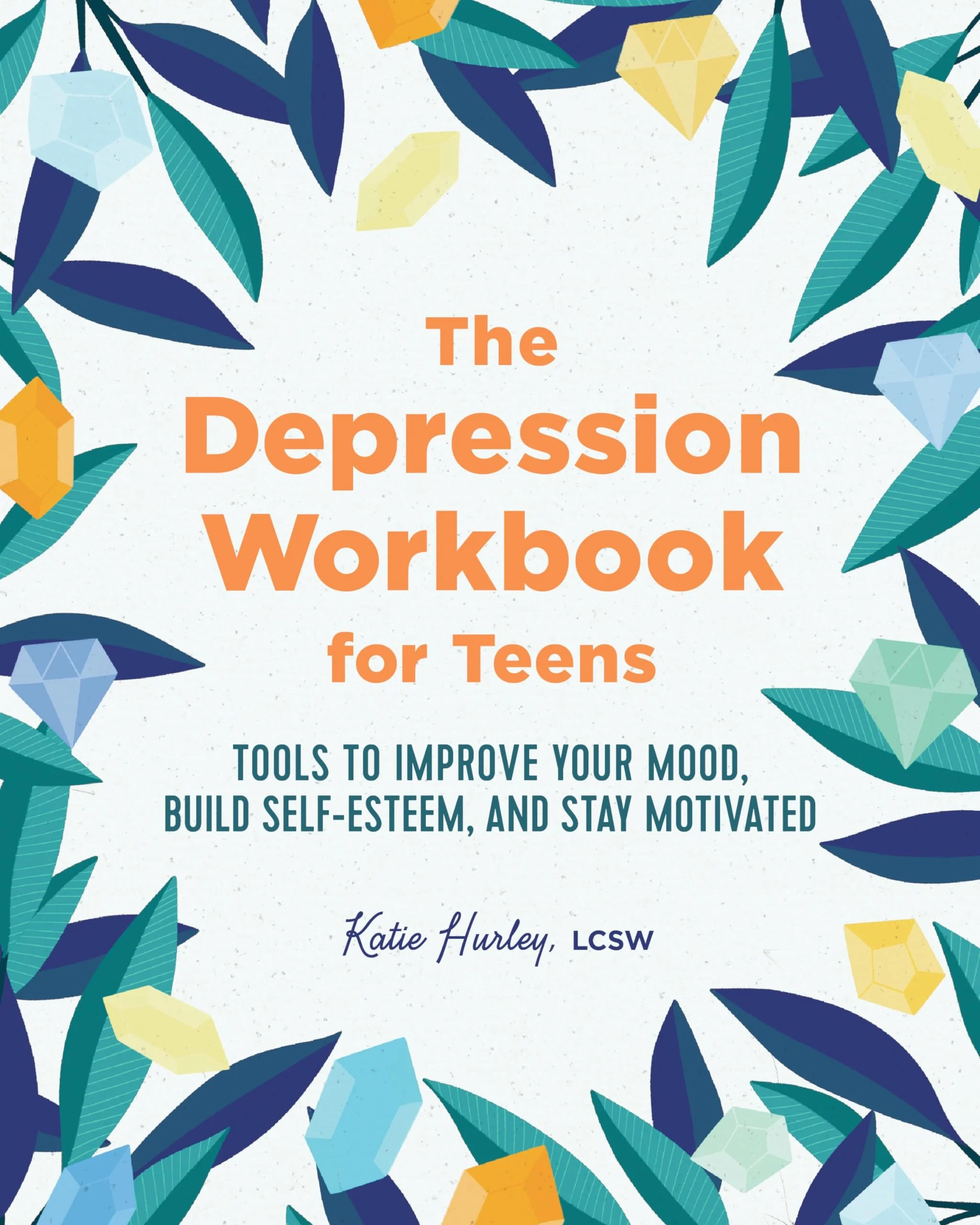
The Depression Workbook for Teens: Tools to Improve Your Mood, Build Self-Esteem and Stay Motivated by Kate Hurley LCSW
You can find this book at our Little Library!
Find relief from depression symptoms with advanced tools for teens ages 12 to 17
This depression workbook draws on the most effective and up-to-date techniques, like cognitive behavioral therapy and mindfulness, to deliver simple exercises that help teens learn how to conquer depression.
Learn how to identify the differences between normal stress and depression, and find easy exercises designed to help you develop the skills you need to manage your emotional well-being and bring happiness back into your life.
The Depression Workbook for Teens includes:
Advice for teens―Tackle your depression head-on using strategies written with your unique needs and time constraints in mind.
Useful tools―With quizzes, journaling prompts, conversation starters, and more, you'll discover simple skill-building exercises that improve your mood and build your self-esteem.
Practical problem solving―Find ways to work through the challenges you're facing, like fighting with your parents, getting up in the morning, struggling with homework, and more.
The Depression Workbook for Teens gives you the helping hand you need to get through this difficult time.
-
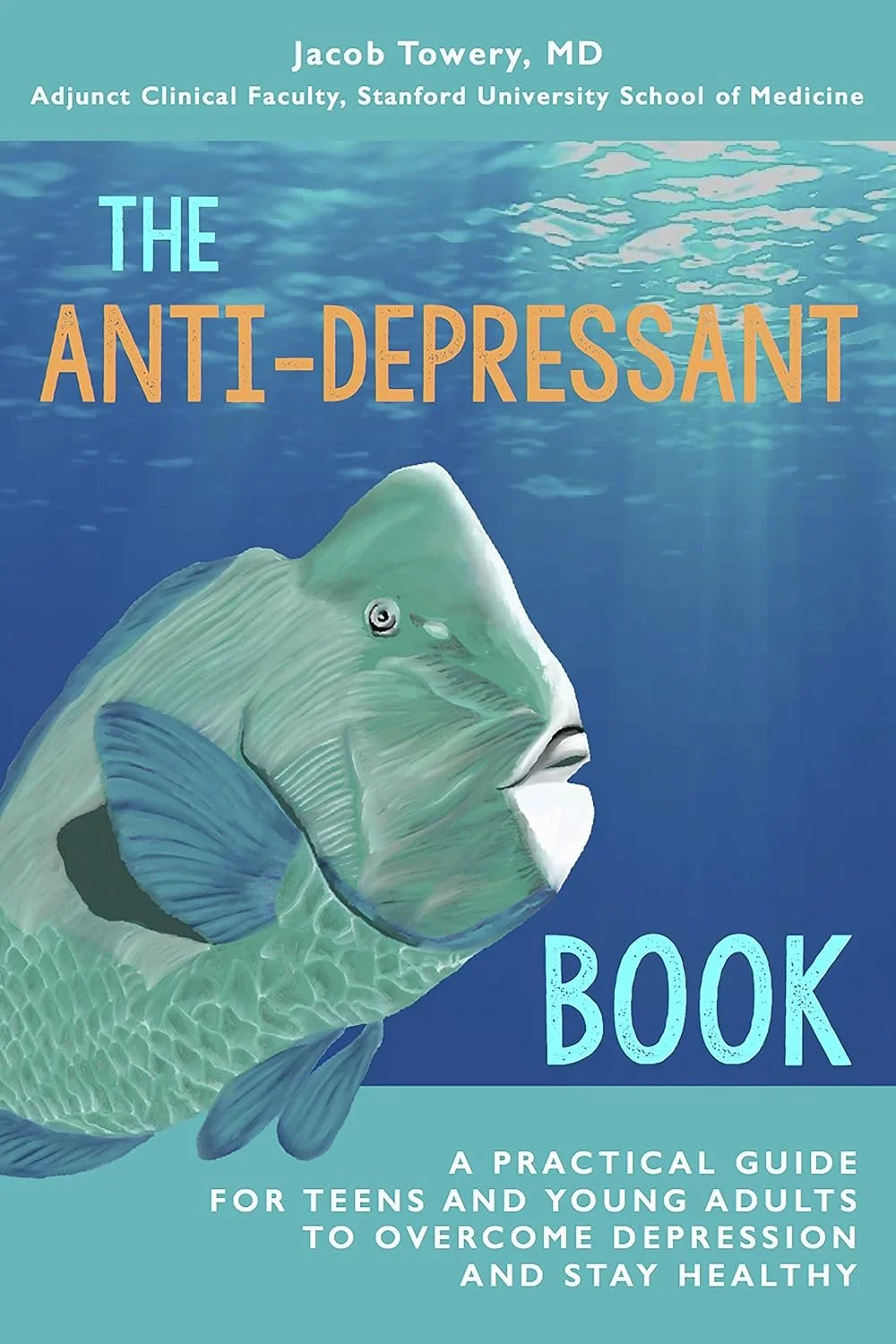
The Anti-Depressant Book by Jacob Towery MD
Don't let the subtitle fool you: The Anti-Depressant Book is useful for teens and adults who are struggling with depression. It offers a drug-free, step-by-step solution to feeling happier quickly and developing healthy habits that will prevent relapse.
This book covers the basics of cognitive behavioral therapy for emerging from depression and staying well. It is filled with paradox, written as if Dr. Towery were having a conversation directly with you, and is neither preachy nor dry. There are also brief sections for parents who are struggling with a depressed child.
The book was written as a response to the suicide clusters in Palo Alto to help prevent as many suicides as possible. The Anti-Depressant Book can be used as an adjunct to traditional therapy or by itself, particularly for those with mild to moderate depression. It is irreverent, fun to listen to, and practical. The book is written in a straightforward, conversational style that works particularly well for teenagers and young adults, but adults who follow all the steps will also see dramatic improvement in their moods and lives.
-

Depression and Your Child by Deborah Serani
Seeing your child suffer in any way is a harrowing experience for any parent. Mental illness in children can be particularly draining due to the mystery surrounding it, and the issue of diagnosis at such a tender age. Depression and Your Child gives parents and caregivers a uniquely textured understanding of pediatric depression, its causes, its symptoms, and its treatments. Serani weaves her own personal experiences of being a depressed child along with her clinical experiences as a psychologist treating depressed children.
Current research, treatments and trends are presented in easy to understand language and tough subjects like self-harm, suicide and recovery plans are addressed with supportive direction. Parents will learn tips on how to discipline a depressed child, what to expect from traditional treatments like psychotherapy and medication, how to use holistic methods to address depression, how to avoid caregiver burnout, and how to move through the trauma of diagnosis and plan for the future. Real life cases highlight the issues addressed in each chapter and resources and a glossary help to further understanding for those seeking additional information. Parents and caregivers are sure to find here a reassuring approach to childhood depression that highlights the needs of the child even while it emphasizes the need for caregivers to care for themselves and other family members as well. -
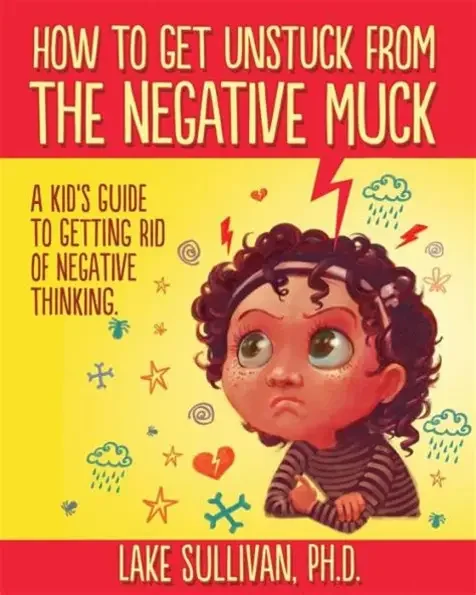
How to Get Unstuck from the Negative Muck by Lake Sullivan PhD
An interactive companion journal that includes all of the journal exercises in How To Get Unstuck From The Negative Muck: A Kid's Guide To Getting Rid Of Negative Thinking. This unique journal is kid-friendly and features extra writing and drawing pages so your child can practice the concepts introduced in the main book! This journal is meant to be used alongside How To Get Unstuck From The Negative Muck: A Kid's Guide To Getting Rid Of Negative Thinking.
-
Depression: A Teen’s Guide to Survive and Thrive by Jacqueline B Toner PhD and Claire A.B. Freeland PhD
Teens get a great deal of information and guidance on many things from study skills to college admissions to test taking...and the list goes on. But many teens get no direct instruction about how to manage difficult emotions. This lack of direction can be hard because teens are at an age vulnerable to depression. While people often use the word depression to describe a momentary mood, the same term is also used to label a more serious and long-lasting problem that can interfere with many aspects of a person's life. It's that second definition that is the focus of this book.
Depression: A Teen's Guide to Survive and Thrive is a guidebook for teenagers who are depressed or at risk for depression. This guide discusses depression and provides guidance on cognitive behavioral therapy principles to help teens take a problem-solving, strategy-based approach to deal with depressed moods, thoughts, and behavior. Intended to serve as an adjunct to therapy, this is a very practical and accessible book that is not overwhelming for teens.