


How to Help your Child with a Learning Disability
Community Resources
· If you think your child might have a learning disability, the first place to go to is your child’s school and teacher(s). Their teacher will look at their grades and watch how they perform in school. If their grades show that they might be struggling in some areas, the teacher will bring this up and they can do some testing in the school. When and if they do the testing, the school will then make the accommodations and help where needed.
If the school does the testing and there is no evidence of a learning disability or their grades are passing, but they are struggling, a private tutor is an option.
Websites
-

Utah Parent Center
Find lots of resources in Utah for specific learning disabilities.
-

Understood
People with learning and thinking differences are two to three times more likely to have mental health challenges like anxiety or depression. These challenges, plus the stigma surrounding them, can leave people feeling isolated or misunderstood. With Understood, no one ever has to feel alone. Our expert-designed resources are free and easy to access, so everyone can get the support they deserve.
-
Smart Kids Learning Disabilities
Smart Kids offers facts about learning disabilities including evaluations and tech tools, practical advice for handling your child’s academic/social/emotional issues, and get access to a community.
-
PBS Supporting Your Child with Disabilities with Digital Learning Games
When my son was in elementary school, my wife and I were unsure about our son playing video games. But when we noticed his interest in a popular math game, we gave it a try. Fast forward to today. Our son just aced his first two college calculus courses.
I have no definitive evidence to link a math game to his current college success. But there is a growing body of research which suggests a strong connection:
Research found Cyberchase has a positive impact on math learning and attitudes towards math;
A study of Odd Squad shows first graders boosted their knowledge of numbers and operations and algebraic thinking;
Research on Peg + Cat found preschool children show improvement in key math skills.
Books
-
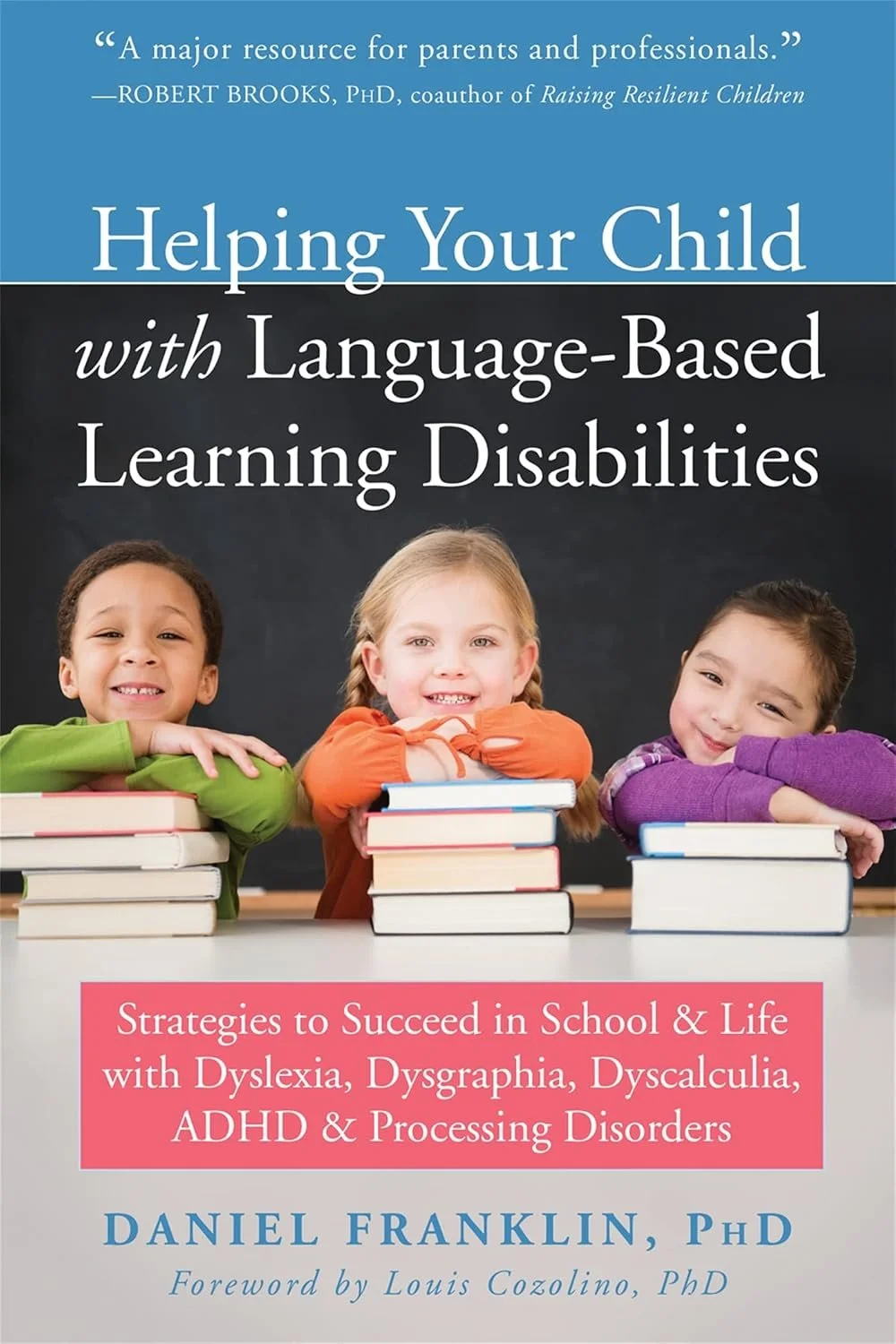
Helping Your Child with Language-Based Learning Disabilities by Daniel Franklin PhD and Louis Cozolino PhD
Based in cutting-edge research in neuroscience, education, and the principles of attachment-based teaching, this important guide for parents offers tools and practices to help children transcend language-based learning difficulties, do better in school, and gain self-confidence and self-esteem.
If your child has a language-based learning difficulty—such as dyscalculia, dyslexia, and auditory processing disorder—they may have to work twice as hard to keep up with their peers in school. Your child may also have feelings of frustration, anger, sadness, or shame as a result of their learning differences. As a parent, it hurts to see your child struggle. But the good news is that there are proven-effective strategies you can learn to help your child be their best. This book will show you how.
Helping Your Child with Language-Based Learning Disabilities outlines an attachment-based approach to help your child succeed based in the latest research. This research indicates that a secure attachment relationship between you and your child actually optimizes their learning ability by enhancing motivation, regulating anxiety, and triggering neuroplasticity. In this book, you’ll discover why it’s so important to accurately assess your child, find new perspectives on LBLDs based on the most current studies, and discover tips and strategies for navigating school, home life, and your child’s future. Most importantly, you’ll learn how your own special bond with your child can help spark their interest in reading, writing, and math.
Every child is unique—and every child learns in his or her own way. With this groundbreaking guide, you’ll be able to help your child thrive, in school and life.
-
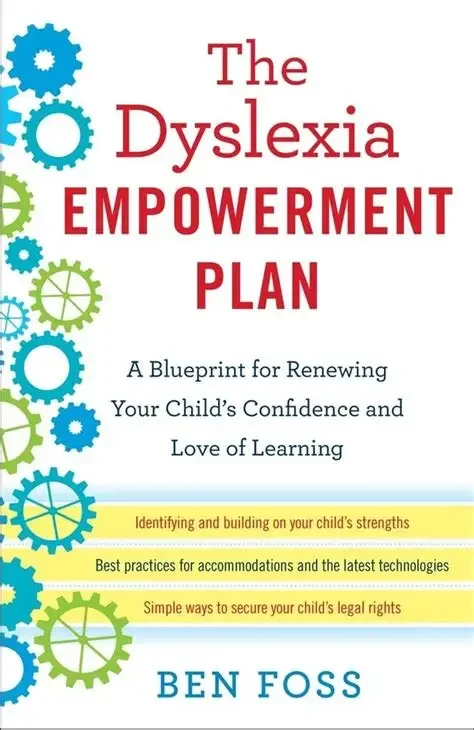
The Dyslexia Empowerment Plan by Ben Foss
More than thirty million people in the United States are dyslexic—a brain-based genetic trait, often labeled as a “learning disability” or “learning difference,” that makes interpreting text and reading difficult. Yet even though children with dyslexia may have trouble reading, they don’t have any problems learning; dyslexia has nothing to do with a lack of intellect.
While other books tell you what dyslexia is, this book tells you what to do. Dyslexics’ innate skills, which may include verbal, social, spatial, kinesthetic, visual, mathematical, or musical abilities, are their unique key to acquiring knowledge. Figuring out where their individual strengths lie, and then harnessing these skills, offers an entrée into learning and excelling. And by keeping the focus on learning, not on standard reading the same way everyone else does, a child with dyslexia can and will develop the self-confidence to flourish in the classroom and beyond. -
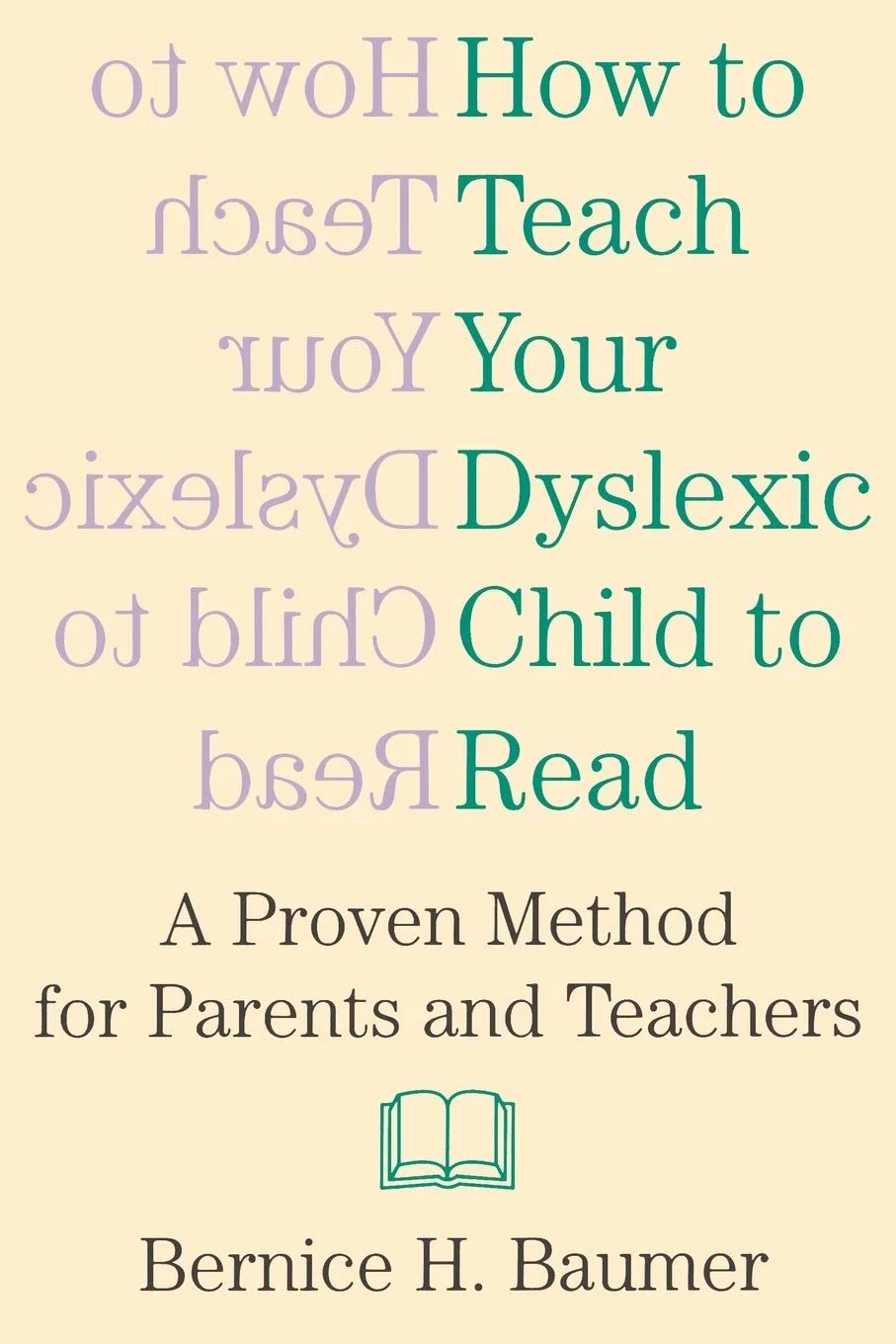
How to Teach your Dyslexic Child to Read by Bernice H. Baumer
Discusses learning disabilities, shares case studies of how children overcame those disabilities, and suggests teaching methods for dyslexic children in kindergarten through third grade.
-
Supporting your Child with Learning Disabilities by Joyette Master
Navigating the world of learning disabilities can be challenging for both parents and their children. This comprehensive guide is designed to empower parents with the knowledge, strategies, and resources they need to understand and support their child's unique learning needs.
Drawing on the latest research and expert insights, this book covers a wide range of learning disabilities, including dyslexia, dyscalculia, ADHD, autism, and auditory processing disorder. It explores the impact of these conditions on a child's academic and social functioning and provides practical guidance on how to address them effectively.
From understanding the diagnostic process and creating an individualized education plan (IEP) to supporting learning at home, building a strong support network, advocating for your child's needs, and promoting inclusion, each chapter equips parents with valuable information and actionable strategies. The book also emphasizes the importance of self-care for parents, offering resources and guidance to ensure their well-being.
-
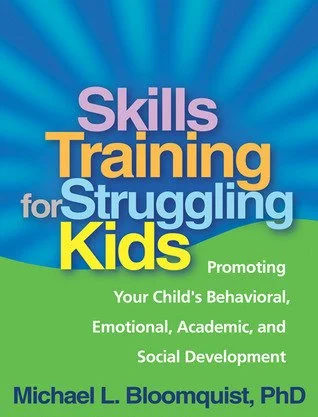
Skills Training for Struggling Kids: Promoting Your Child's Behavioral, Emotional, Academic, and Social Development
Challenging kids don't behave badly on purpose -- they are simply struggling to "catch up" in key areas of psychological and cognitive development. If your child or teen's emotional or behavioral difficulties are getting in the way of success at home, at school, or in social situations, this is the book for you. Dr. Michael Bloomquist has spent decades helping parents to understand acting-out kids and support their healthy development. In these pages, he presents tried-and-true ways you can build your 5- to 17-year-old's skills to:
*Follow rules and behave honestly.
*Curb angry outbursts.
*Make and maintain friendships.
*Express feelings productively.
*Stay on task at school.
*Resolve conflicts with siblings.
*Manage stress.
Loads of checklists, worksheets, and troubleshooting tips help you select and implement the strategies that meet your child's specific needs. You'll also build your own skills for parenting effectively when the going gets tough. Systematic, compassionate, and practical, the book is grounded in state-of-the-art research. The road to positive changes for your child and family starts here.
Mental health professionals, see also the related title The Practitioner Guide to Skills Training for Struggling Kids. -
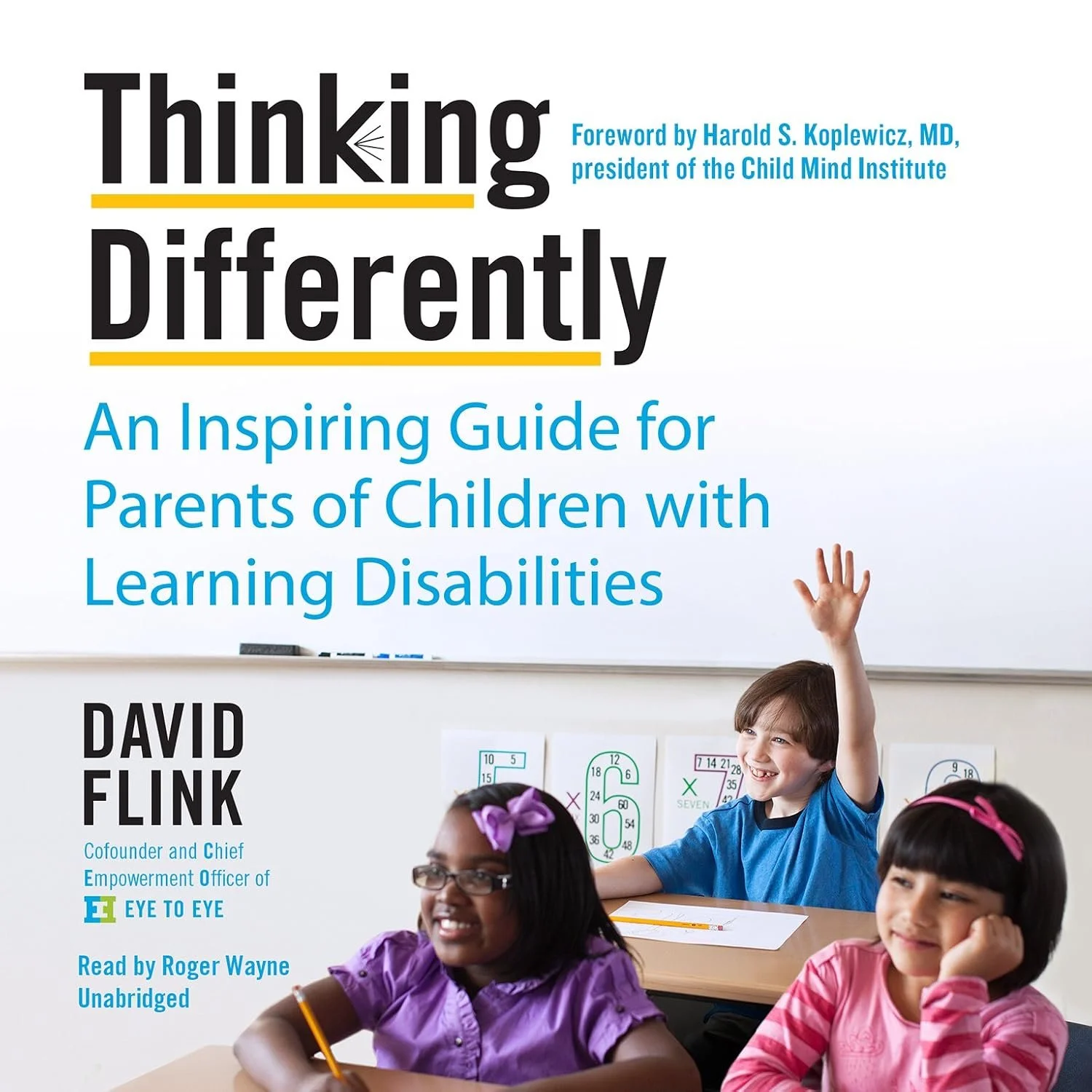
Thinking Differently: An Inspiring Guide for Parnets of Children with Learning Disabilities by David Flink
An innovative, comprehensive guide - the first of its kind - to help parents understand and accept learning disabilities in their children, offering tips and strategies for successfully advocating on their behalf and helping them become their own best advocates.
In Thinking Differently, David Flink, the leader of Eye to Eye - a national mentoring program for students with learning and attention issues - enlarges our understanding of the learning process and offers powerful, innovative strategies for parenting, teaching, and supporting the 20 percent of students with learning disabilities. An outstanding fighter who has helped thousands of children adapt to their specific learning issues, Flink understands the needs and experiences of these children firsthand. He, too, has dyslexia and ADHD.
Focusing on how to arm students who think and learn differently with essential skills, including meta-cognition and self-advocacy, Flink offers real, hard advice, providing the tools to address specific problems they face - from building self-esteem and reconstructing the learning environment to getting proper diagnoses and discovering their inner gifts. With his easy, hands-on ''Step-by-Step Launchpad to Empowerment,'' parents can take immediate steps to improve their children's lives.
Thinking Differently is a brilliant, compassionate work, packed with essential insights and real-world applications indispensable for parents, educators, and other professional involved with children with learning disabilities.